
Larger Animals & Birds
What Attracts Raccoons to Your Property?
Not chasing the animal—but removing the reason it came in the first place.
you clean up your yard, secure everything, and think the problem is solved.
But a few nights later—it happens again.
The trash is disturbed. Something has clearly been digging around.
And now you’re left wondering:
Why do raccoons keep coming back to my property?
The truth is, raccoons don’t return without a reason.
If they keep showing up, your property is offering something they want—and until that’s removed, the cycle usually continues.
In this guide, we’ll break down what attracts raccoons, why some homes become repeat targets, and what these signs actually mean.
🏠 Introduction: Why Raccoons Choose Certain Properties
Raccoons are opportunistic animals.
They don’t randomly pick a location—they choose places that provide easy access to survival needs:
- Food
- Water
- Shelter
If your property consistently offers these, it becomes part of their routine.
🧲 The Biggest Attractants You Might Overlook
Many homeowners assume raccoons are just passing through.
But in reality, they often return because of small, consistent attractants that go unnoticed.
Even minor food or shelter sources can make a big difference.
🍽️ Food Sources That Keep Them Coming Back
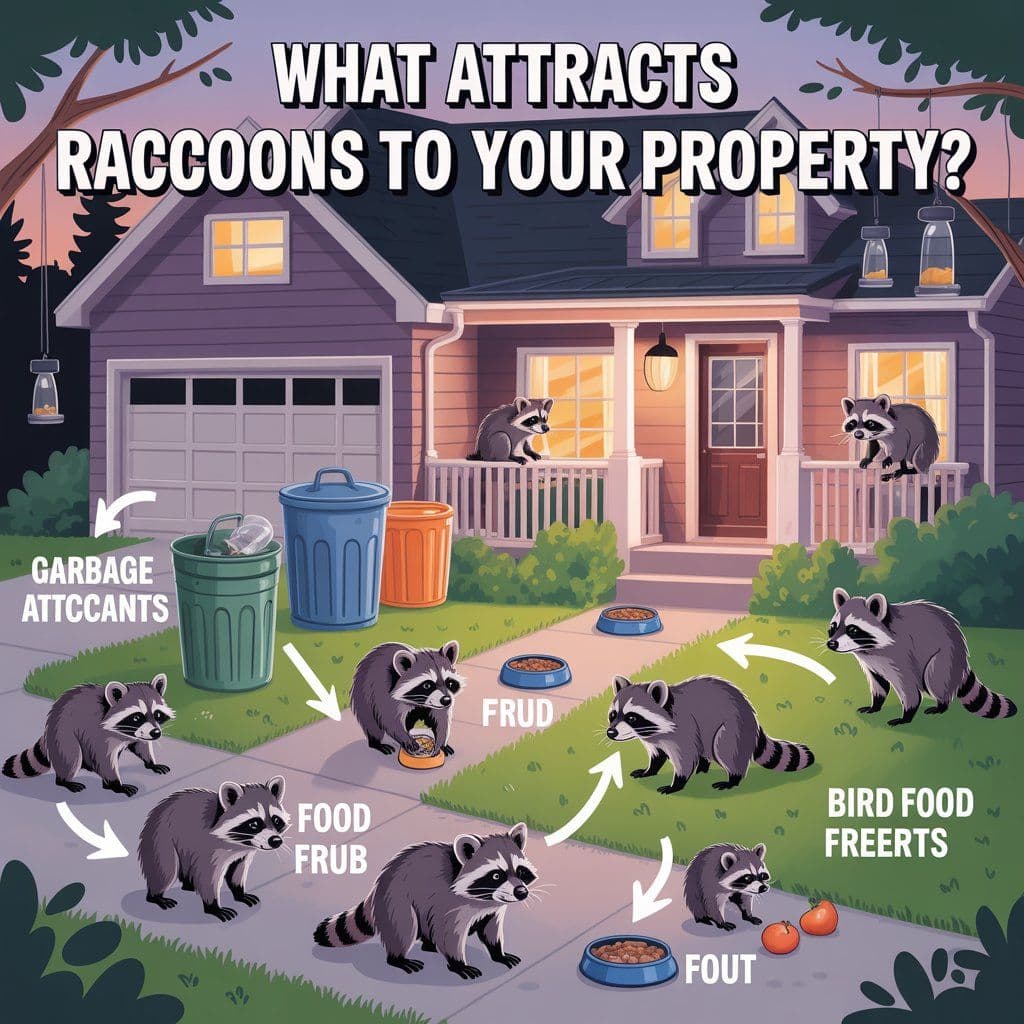
Food is the number one reason raccoons visit a property.
Common attractants include:
- Unsecured trash bins
- Pet food left outside
- Bird feeders (and fallen seeds)
- Compost piles
- Fruits and vegetables in gardens
Raccoons have strong memories—once they find food, they will return repeatedly.
🏚️ Shelter and Nesting Opportunities
If raccoons feel safe, they may stay longer than expected.
They look for:
- Spaces under decks or porches
- Sheds or garages
- Attics or crawl spaces
- Dense vegetation or brush piles
These areas provide protection and a place to rest.
💧 Water Sources and Environmental Factors
Water is another key factor.
Raccoons are attracted to:
- Birdbaths
- Ponds
- Pet water bowls
- Standing water
Even small amounts of water can be enough to draw them in.
🌙 Why Some Yards Are More Attractive Than Others
Not all properties attract raccoons equally.
Yards that are more appealing often have:
- Easy access to food
- Hidden or quiet areas
- Minimal disturbance
- Open entry points
The combination of these factors makes a property more inviting.
🔁 Why the Problem Keeps Repeating
If raccoons keep coming back, it usually means:
- The attractant hasn’t been removed
- The environment still feels safe
- There’s easy access to resources
Simply scaring them away doesn’t solve the problem—because the reason they came is still there.
🛠️ What to Do Once You Identify the Cause
✔ Remove Food Sources
- Secure trash bins
- Avoid leaving pet food outside
- Clean up fallen fruit
✔ Limit Shelter Opportunities
- Block access to crawl spaces and decks
- Trim dense vegetation
- Keep storage areas organized
✔ Manage Water Sources
- Remove standing water
- Fix leaks
- Limit open water access
✔ Reduce Accessibility
- Close entry points
- Maintain fences or barriers
- Keep your yard well-maintained
⚠️ Common Mistakes to Avoid
- Assuming raccoons will leave on their own
- Only reacting instead of preventing
- Ignoring small attractants
- Overlooking hidden shelter areas
These are the main reasons the problem continues.
💡 Conclusion: Removing the Attraction Is the Key
Raccoons don’t stay where there’s nothing to gain.
If your property offers food, water, and shelter, they will keep returning—no matter how often you try to scare them away.
But once those attractants are removed, your property becomes far less appealing.
And that’s the real solution:
👉 Not chasing the animal—but removing the reason it came in the first place.