
Insects & Creepy-Crawlies
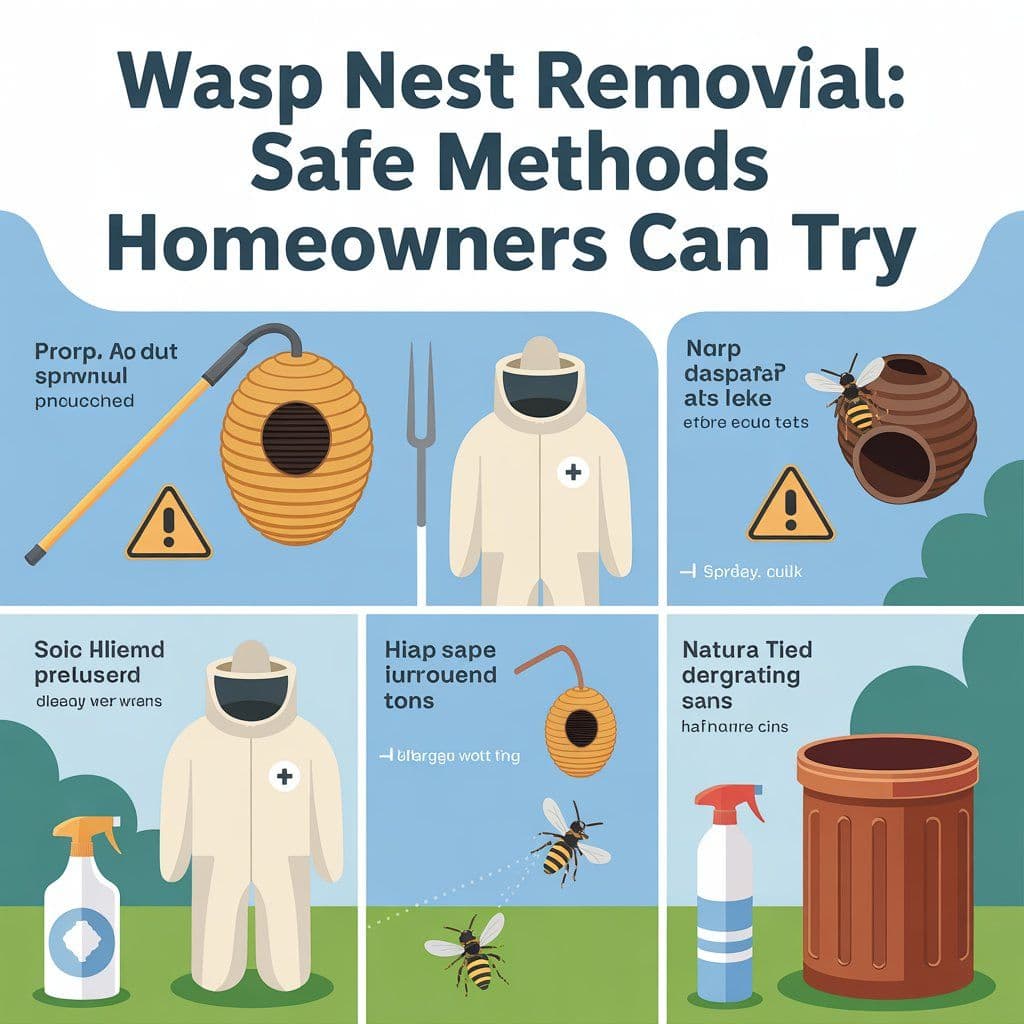
Wasp Nest Removal: Safe Methods Homeowners Can Try
Small, early-stage nests can sometimes be handled safely with proper precautions.
You’re outside enjoying your yard when you notice something unusual—a small cluster tucked under the roof, in a corner, or near the fence.
At first, it doesn’t seem like much.
But over the next few days, you start seeing more wasps flying in and out.
Now it’s no longer just something you noticed—it’s something you’re actively avoiding.
And the question becomes:
Can I remove this safely myself, or is this something I shouldn’t touch?
In this guide, we’ll walk through safe methods homeowners can try, how to assess the risk, and when it’s better to step back and call a professional.
🏠 Introduction: Why Wasp Nests Require Caution
Wasps are not like many other pests.
They are:
- Territorial
- Defensive
- Capable of stinging multiple times
Disturbing a nest—especially without preparation—can quickly turn into a dangerous situation.
That’s why removal isn’t just about getting rid of the nest—it’s about doing it safely.
⚖️ When It’s Safe to Remove a Wasp Nest Yourself
Some situations are lower risk and may be manageable.
You may consider DIY removal if:
- The nest is small (early-stage)
- Activity is limited
- The nest is easy to access
- It’s located away from high-traffic areas
Even then, caution is still essential.
🚫 When You Should NOT Attempt Removal
There are clear situations where DIY is not recommended:
- Large, well-established nests
- Nests inside walls, roofs, or enclosed spaces
- High wasp activity
- If you or someone nearby is allergic to stings
In these cases, professional help is the safer choice.
🛠️ Safe Methods Homeowners Can Try
If the situation is manageable, these approaches can reduce risk.
✔ Remove Nests Early
Early nests are:
- Smaller
- Less populated
- Easier to handle
Timing makes a significant difference.
✔ Act During Low Activity Times
- Early morning or late evening
- When wasps are less active
Avoid midday when activity peaks.
✔ Keep a Safe Distance
Use methods that allow space between you and the nest.
Avoid direct contact whenever possible.
✔ Use Protective Measures
Even for small nests:
- Wear long sleeves
- Cover exposed skin
- Protect your face and hands
✔ Apply Targeted Treatments
Using appropriate pest control methods can help reduce activity before removal, making the process safer.
⚖️ Natural vs Chemical Approaches
Natural Methods
- Lower risk to the environment
- Less aggressive
- Better for prevention and small nests
Chemical Methods
- Faster results
- More effective for active nests
- Should be used carefully and according to instructions
Choosing the right approach depends on the situation—not all nests require the same method.
⚠️ Common Mistakes to Avoid
- Attempting to remove large nests
- Disturbing nests during peak activity
- Not wearing protection
- Using the wrong method for the situation
- Acting too quickly without assessing risk
These mistakes are often what lead to injuries.
💡 Conclusion: Safety First, Always
Wasp nest removal isn’t just another household task—it’s something that requires awareness, patience, and the right approach.
Small, early-stage nests can sometimes be handled safely with proper precautions.
But when the risk increases, knowing when not to act is just as important as knowing how.
Because in situations like this, safety should always come first.