
Rodents, Reptiles & Bats
How to Get Rid of Mice in Garage: A Complete Step-by-Step Guide
It's to turn your garage into a place where the next mouse has difficulty getting inside and little reason to stay.
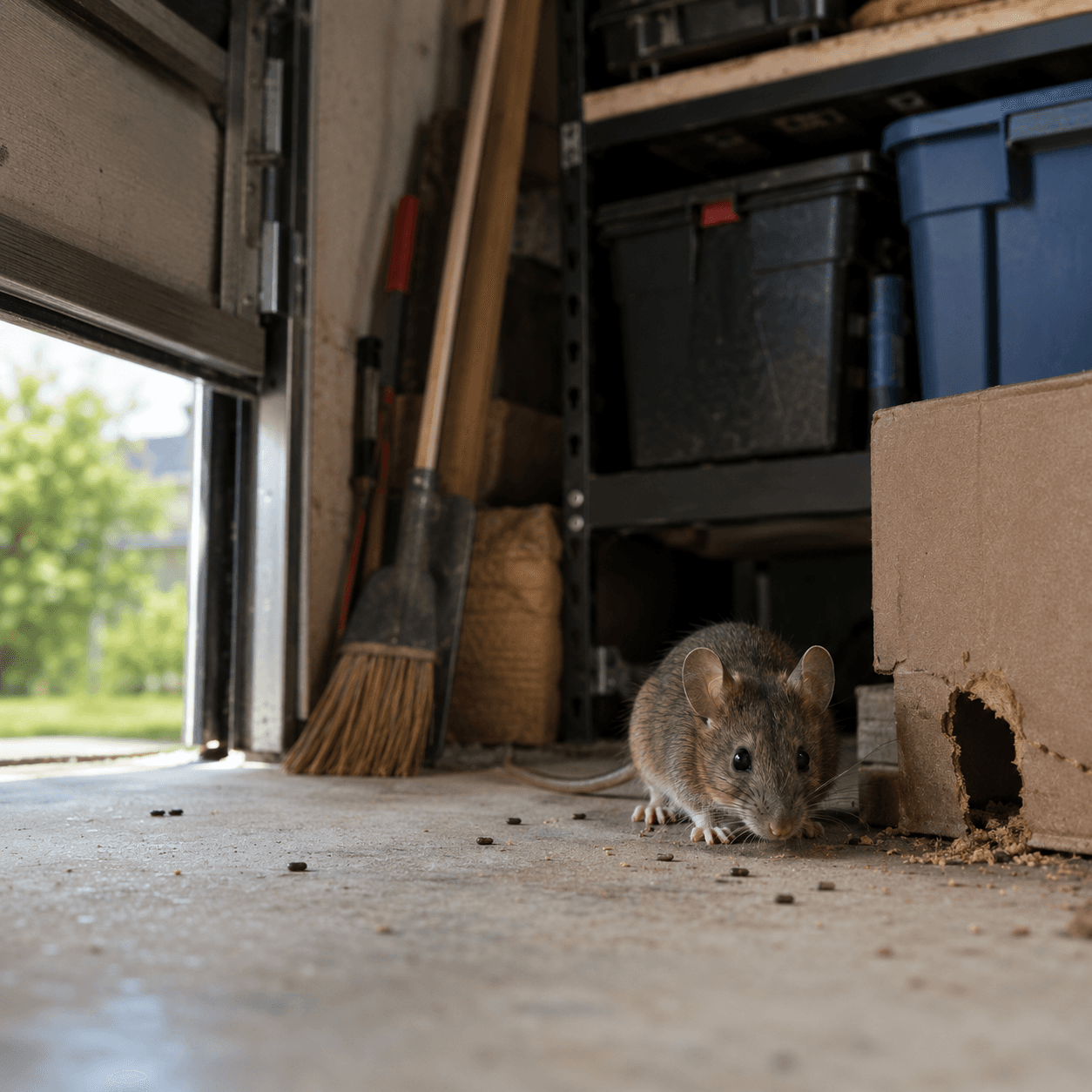
you walk into your garage one morning and notice a few small black droppings near the wall.
Then you discover a cardboard box with one corner chewed open.
A few days later, you hear something moving behind your storage shelves.
That’s when you start wondering:
“Do I have mice living in my garage?”
Garages are particularly attractive to mice because they often provide exactly what rodents are looking for—shelter, warmth, hiding places, and sometimes easy access to food.
Even worse, a garage infestation doesn’t always stay in the garage. Once mice become established there, they may eventually find routes into walls, kitchens, attics, and other parts of the house.
Fortunately, getting rid of garage mice is possible when you address both the rodents already inside and the conditions that attracted them.
In this guide, we’ll walk through how to identify mouse activity in your garage, remove existing mice, find their entry points, and prevent them from returning.
🏠 Introduction: Why Mice Love Garages
Compared with frequently used areas of a home, garages often provide mice with an ideal environment.
They’re usually:
- Quiet at night
- Relatively warm
- Full of hiding places
- Connected to the house
- Easy to enter through small gaps
Garages may also contain unexpected food sources.
These can include:
- Pet food
- Bird seed
- Grass seed
- Garbage
- Stored snacks
- Spilled food
Once mice discover reliable shelter and food, they have very little reason to leave.
That’s why simply catching one mouse may not solve the problem.
🐭 Signs You Have Mice in Your Garage
Mice are good at remaining hidden, so you may notice evidence before actually seeing one.
Mouse Droppings
Small dark droppings may appear:
- Along walls
- Behind storage boxes
- Near garage doors
- Around stored food
- Under shelving
Fresh droppings appearing repeatedly can indicate ongoing activity.
Chewed Boxes and Packaging
Mice may gnaw through:
- Cardboard
- Paper bags
- Plastic packaging
- Food containers
They may also shred these materials for nesting.
Scratching Sounds
Listen during quieter periods.
Mouse activity may produce:
- Scratching
- Scurrying
- Gnawing
especially behind shelves or inside walls.
Nesting Materials
Mice commonly build nests using soft materials such as:
- Shredded paper
- Fabric
- Insulation
- Cardboard
Finding concentrated piles of these materials may indicate a nearby nesting area.
Gnaw Marks
Check wooden surfaces, containers, wires, and stored belongings for signs of chewing.
📦 Where Mice Usually Hide in Garages
Garages can contain dozens of potential hiding places.
Pay particular attention to:
Behind Storage Shelves
Dark, rarely disturbed spaces provide excellent shelter.
Inside Cardboard Boxes
Boxes can provide both nesting material and protection.
Behind Appliances
If your garage contains refrigerators, freezers, or other equipment, check behind them.
Inside Wall Cavities
Small structural gaps may allow mice to move between the garage and the rest of the house.
Around Stored Vehicles
Mice may also explore vehicles and engine compartments, particularly when vehicles remain unused for long periods.
🔍 Step 1: Find Out Where the Mice Are Entering
Before focusing entirely on trapping, inspect your garage for entry points.
One of the most important places to check is the garage door.
Look along:
- Bottom seals
- Side seals
- Corners
- Door tracks
Pay special attention to light visible underneath a closed garage door.
Also inspect:
- Utility openings
- Foundation gaps
- Exterior vents
- Pipes
- Wall penetrations
- Doors connecting the garage to the house
Remember that mice can take advantage of surprisingly small openings.
🍞 Step 2: Remove Food and Water Sources
Once mice find a reliable food source, they may repeatedly return to the same location.
Store Pet Food Properly
Instead of leaving pet food inside bags, use sturdy sealed containers.
Secure Bird Seed
Bird seed is another common garage attraction.
Clean spilled seeds immediately.
Manage Garbage
Keep garbage containers tightly closed.
Clean spills and food residue around bins.
Check for Water
Look for:
- Leaking pipes
- Standing water
- Pet bowls
- Condensation
Removing accessible moisture makes the garage less attractive.
🧹 Step 3: Reduce Clutter and Nesting Areas
A cluttered garage gives mice countless places to hide.
Start by organizing:
- Cardboard boxes
- Old clothing
- Paper
- Seasonal decorations
- Storage materials
Where practical, replace cardboard boxes with sturdy plastic storage containers with secure lids.
Keep stored items raised from the floor when possible.
This won’t eliminate mice by itself, but it makes mouse activity easier to detect and reduces potential nesting areas.
🪤 Step 4: Choose an Effective Mouse Control Method
If mice are already inside the garage, prevention alone may not be enough.
You’ll also need to address the existing rodents.
Several options are commonly used.
Snap Traps
Traditional snap traps can be effective when placed along known mouse travel routes.
Place them near:
- Walls
- Droppings
- Shelving
- Suspected nesting areas
Electronic Mouse Traps
Electronic traps provide another option for homeowners who prefer:
- Reusable equipment
- Less direct contact
- Cleaner disposal
Some automatic electronic rodent-control systems may also be useful in locations where recurring rodent activity requires longer-term monitoring.
Live-Capture Traps
Live traps capture mice without immediately killing them.
However, they require:
- Frequent monitoring
- Appropriate handling
- Consideration of local regulations and release practices
What About Ultrasonic Repellents?
Ultrasonic devices may be used as a supplementary deterrent, but they shouldn’t be your only response to an established garage infestation.
Physical obstacles can interfere with ultrasonic sound, and results may vary.
For active mice, direct control combined with exclusion is generally more reliable.
🧽 Step 5: Clean Up After Mouse Activity
Once mouse activity has been controlled, contaminated areas should be cleaned carefully.
Rodent droppings and nesting materials should not simply be swept or vacuumed while dry, because this can disturb contaminated particles.
Instead, follow appropriate public-health guidance for cleaning rodent-contaminated areas, including ventilating the space and properly disinfecting droppings before removal.
Wear suitable protective equipment during cleanup.
If contamination is extensive, professional cleanup may be appropriate.
🚪 How to Keep Mice Out of Your Garage
Removing existing mice solves today’s problem.
Mouse-proofing helps prevent tomorrow’s.
Replace Damaged Garage Door Seals
Check the bottom and sides of the garage door regularly.
A damaged seal can create an easy entry point.
Seal Exterior Gaps
Inspect the entire garage exterior and close suitable openings using rodent-resistant materials.
Keep Food in Sealed Containers
Pay particular attention to:
- Pet food
- Bird seed
- Grass seed
Reduce Outdoor Shelter
Around the garage exterior, manage:
- Dense vegetation
- Wood piles
- Outdoor clutter
These areas can provide shelter close to potential entry points.
Monitor Regularly
Even after the infestation appears to be gone, continue checking for:
- Fresh droppings
- Gnaw marks
- New nesting materials
Early detection makes a recurring problem much easier to manage.
⚠️ Common Garage Mouse Control Mistakes
Mistake #1: Catching Mice Without Sealing the Garage
You may remove the existing mice only to have new ones enter later.
Mistake #2: Ignoring the Garage Door
The garage door perimeter is one of the first areas worth inspecting.
Mistake #3: Leaving Pet Food in Bags
Paper and plastic packaging may not provide enough protection against rodents.
Mistake #4: Keeping Too Many Cardboard Boxes
Cardboard provides both shelter and nesting material.
Mistake #5: Using Repellents Alone
Peppermint oil or ultrasonic devices may discourage activity in some situations, but they don’t physically close the route mice use to enter.
Mistake #6: Stopping After Catching One Mouse
Continue monitoring.
One capture doesn’t automatically mean the infestation is over.
👨🔧 When to Consider Professional Pest Control
Some garage mouse problems can be handled with careful DIY control.
Professional assistance may be appropriate when:
- Mice continue appearing despite repeated trapping
- You cannot locate their entry points
- Activity has spread into walls or ceilings
- Multiple nesting areas are suspected
- Rodents have damaged electrical wiring
- Contamination is extensive
The earlier an established infestation is addressed, the easier it usually is to prevent mice from spreading into other parts of the property.
💡 Conclusion: Make Your Garage Difficult for Mice to Return
Getting rid of mice in your garage requires more than placing a trap in the corner.
A successful strategy addresses the entire problem:
- Find where mice are entering
- Remove accessible food and water
- Reduce clutter and nesting areas
- Remove the mice already inside
- Seal entry points
- Continue monitoring
Garages naturally provide many of the conditions mice prefer, which makes prevention particularly important.
If you catch mice but leave food, shelter, and entry points untouched, the problem can return.
The goal isn’t simply to catch the mice living in your garage today.
It’s to turn your garage into a place where the next mouse has difficulty getting inside and little reason to stay.