
Rodents, Reptiles & Bats
Do Ultrasonic Mouse Repellents Work? What Homeowners Should Know
They may influence mouse activity in certain situations, but they should not be relied upon as the only solution to a mouse infestation.
You hear scratching behind the kitchen wall at night.
You don’t want poison around the house, and setting traps isn’t exactly something you’re excited about.
Then you discover ultrasonic mouse repellents.
The promise sounds perfect:
Plug in a small device, let it produce high-frequency sound, and mice will stay away.
No poison.
No traps to empty.
No complicated setup.
But there’s one important question:
Do ultrasonic mouse repellents actually work?
The answer isn’t as simple as many product advertisements make it sound. Ultrasonic devices may influence rodent behavior under certain conditions, but their effectiveness can vary significantly depending on placement, room layout, competing food sources, and whether mice are already established inside the home.
In this guide, we’ll explain how ultrasonic mouse repellents are supposed to work, their limitations, why results vary, and what you can do to improve your overall mouse-control strategy.
🐭 Introduction: What Is an Ultrasonic Mouse Repellent?
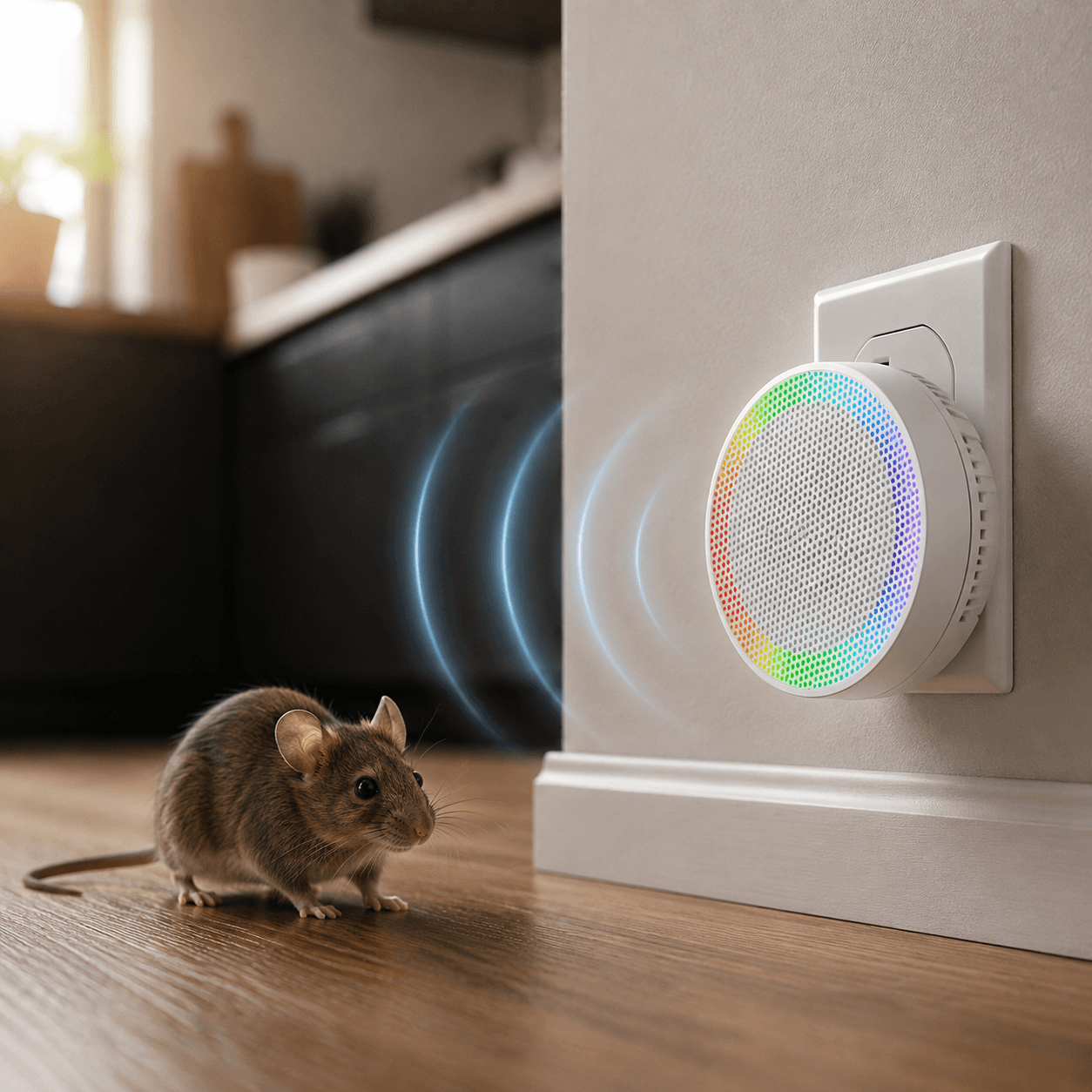
An ultrasonic mouse repellent is an electronic device designed to produce high-frequency sound.
These frequencies are generally intended to be above or near the upper range of normal human hearing while creating an uncomfortable environment for rodents.
Most household units are simple plug-in devices.
Homeowners commonly place them in:
- Kitchens
- Garages
- Basements
- Attics
- Storage rooms
- Bedrooms
Unlike traps, these devices aren’t designed to capture or kill mice.
Instead, the goal is to make an area less attractive to them.
🔊 How Do Ultrasonic Mouse Repellents Work?
Mice rely heavily on their senses to understand their surroundings.
Ultrasonic repellents attempt to take advantage of this by producing high-frequency sound waves that may disturb rodents.
In theory, repeated exposure could make mice less comfortable remaining in the treated area.
This sounds straightforward.
However, real homes are much more complicated than controlled environments.
Walls, furniture, cabinets, appliances, and other objects can affect how sound travels through a room.
That is one reason homeowners often report very different results.
❓ So, Do Ultrasonic Mouse Repellents Actually Work?
This is where expectations need to be realistic.
Ultrasonic devices may affect mouse behavior temporarily in some environments, but research and guidance from university extension sources have generally not supported relying on ultrasonic devices as a stand-alone solution for established rodent problems.
A mouse may initially react to an unfamiliar sound.
But that does not necessarily mean it will permanently leave your property.
If your home still provides:
- Easy food
- Water
- Warm shelter
- Nesting areas
- Open entry points
those benefits may outweigh the disturbance created by the device.
In other words:
Ultrasonic repellents should not be treated as a replacement for proper mouse control and exclusion.
🏠 Why Results Can Vary From Home to Home
You may notice dramatically different reviews of ultrasonic mouse repellents.
One homeowner says:
“I plugged it in and haven’t seen a mouse since.”
Another says:
“The mice walked right past it.”
There are several possible reasons.
Room Layout
Ultrasonic sound works best when there are fewer physical obstacles.
Furniture and walls can reduce coverage.
Placement
A device installed behind:
- Furniture
- Cabinets
- Appliances
may have limited effectiveness in the area you’re trying to protect.
Existing Infestation
A mouse that occasionally explores a room may react differently from mice that already have:
- Established nests
- Reliable food
- Safe hiding places
inside the house.
Alternative Resources
If food is easily available, mice may tolerate environmental disturbances rather than abandoning a reliable feeding location.
🧱 Can Ultrasonic Sound Travel Through Walls?
This is one of the biggest misunderstandings surrounding ultrasonic pest repellents.
Homeowners sometimes assume that one device plugged into the kitchen can protect:
- The kitchen
- Adjacent rooms
- Wall cavities
- Upstairs areas
- The basement
Ultrasonic sound generally does not travel through solid barriers as effectively as ordinary lower-frequency sound.
Walls, doors, cabinets, and large furniture can interfere with or block it.
This means a device in one room shouldn’t automatically be expected to affect mice living inside another room or deep inside wall cavities.
🔄 Do Mice Get Used to Ultrasonic Repellents?
Another potential limitation is habituation.
Animals can sometimes become accustomed to environmental stimuli that initially seem threatening or uncomfortable.
Imagine hearing an unfamiliar noise near your home.
At first, you might avoid the area.
But if nothing dangerous ever happens, eventually you may stop reacting strongly.
A similar principle can apply to rodents.
If mice discover that the ultrasonic sound doesn’t represent an actual threat—and food and shelter remain available—they may become less responsive over time.
📍 Where Should You Place an Ultrasonic Mouse Repellent?
If you decide to use an ultrasonic device, placement matters.
Avoid hiding the device:
- Behind sofas
- Inside cabinets
- Behind refrigerators
- Behind large storage boxes
Instead, keep the device relatively unobstructed.
Focus on areas where mouse activity has been observed, such as:
- Garages
- Kitchens
- Storage rooms
- Basements
However, remember that placement alone cannot solve the underlying reasons mice entered the property.
⚡ Ultrasonic Repellents vs Mouse Traps
These two approaches serve very different purposes.
Ultrasonic Repellents
Designed primarily to:
Discourage mouse activity.
Potential advantages:
- No poison
- No disposal
- Easy operation
- Continuous use
Potential limitations:
- Results can vary
- Physical barriers affect sound
- Mice may become accustomed to the stimulus
- Does not physically remove mice
Mouse Traps
Designed primarily to:
Remove mice that are already present.
Options include:
- Snap traps
- Electronic mouse traps
- Live-capture traps
Properly selected and positioned traps provide a direct way to address an existing mouse population.
This distinction is important.
Repelling and removing are not the same thing.
⚠️ Common Mistakes When Using Ultrasonic Repellents
Mistake #1: Expecting One Device to Protect the Entire House
Walls and other obstacles can limit ultrasonic coverage.
Mistake #2: Using the Device Behind Furniture
Physical objects may interfere with the sound.
Mistake #3: Ignoring Food Sources
A repellent has a much harder job when mice have easy access to food.
Mistake #4: Leaving Entry Points Open
Even if a device discourages activity in one location, new mice may continue entering through exterior gaps.
Mistake #5: Assuming Silence Means the Mice Are Gone
Not hearing mice doesn’t necessarily confirm that they’ve left.
Continue monitoring for:
- Droppings
- Gnaw marks
- Nesting materials
- Food damage
🛡️ What Works Better for Long-Term Mouse Control?
Rather than searching for one device that solves everything, think of mouse control as a system.
1. Identify Mouse Activity
Determine where mice are:
- Feeding
- Traveling
- Nesting
2. Remove Existing Mice
Use appropriate control methods in areas with confirmed activity.
3. Seal Entry Points
Inspect:
- Foundations
- Doors
- Garages
- Utility openings
- Exterior vents
Preventing entry is one of the most important parts of long-term control.
4. Remove Food Sources
Keep food in sealed containers and regularly clean:
- Kitchen floors
- Pantry areas
- Under appliances
- Pet feeding areas
5. Reduce Hiding Places
Organize cluttered:
- Garages
- Basements
- Storage rooms
so mouse activity is easier to detect.
6. Continue Monitoring
Even after activity stops, keep watching for new evidence.
Early detection makes future infestations much easier to control.
💡 Conclusion: Don’t Rely on Ultrasonic Repellents Alone
So, do ultrasonic mouse repellents work?
The most accurate answer is:
They may influence mouse activity in certain situations, but they should not be relied upon as the only solution to a mouse infestation.
Their effectiveness can be affected by:
- Room layout
- Device placement
- Walls and furniture
- Available food
- Established nesting areas
- Rodent habituation
If you’re trying to prevent occasional mouse activity, an ultrasonic device may be something you choose to include as part of a broader strategy.
But if mice are already living inside your home, focus first on methods that address the actual infestation.
The strongest long-term approach combines:
Removal + Exclusion + Sanitation + Monitoring
Because ultimately, making a noise mice dislike is very different from removing the reasons they entered your home in the first place.